
Cearvol is using CES 2026 to introduce its first global showcase of AI-driven hearing wearables, signaling a clear push toward hearing products that feel closer to everyday consumer tech than traditional medical devices. The company plans to preview three new products at the show, each aimed at a different use case, while reinforcing a broader goal of making hearing assistance more intuitive, accessible, and lifestyle-friendly.
At the center of Cearvol’s CES presence is a trio of devices that rethink how hearing support fits into daily routines: a touchscreen-controlled hearing aid, an open-ear hearing aid, and smart hearing glasses. Together, they reflect a design philosophy focused on comfort, ease of use, and flexibility rather than clinical complexity.
Cearvol Wave Focuses on Simplicity Through Touch
Cearvol Wave introduces a different approach to daily hearing aid control by shifting core adjustments away from smartphone apps and onto the charging case itself. A built-in touchscreen lets users manage volume, switch listening modes, and handle essential settings directly on the case. That design choice targets users who prefer a more tactile experience or want fewer steps in their daily routine.
Wave includes AUX-IN support, which opens the door to wired audio sources in places where Bluetooth access may be limited, such as in-flight entertainment systems. The result is a hearing aid designed to reduce friction, especially for first-time users or those who want straightforward controls without digging through menus.
Cearvol Liberte Introduces an Open-Ear Hearing Aid Design
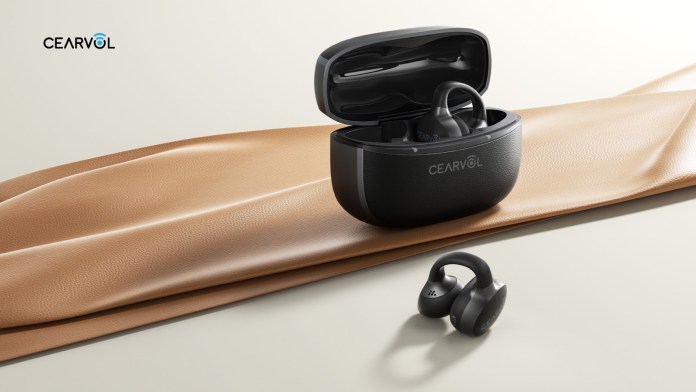
Cearvol Liberte is positioned as the industry’s first open-ear hearing aid, built to deliver hearing support without sealing off the ear canal. By leaving the ear open, Liberte allows users to remain more aware of their surroundings while listening to audio or taking calls, a design choice tied to comfort and situational awareness.
Liberte also leans into customization. A modular design with detachable accessories lets users adjust both function and appearance, framing the hearing aid as a wearable rather than a purely medical device. That approach aligns with Cearvol’s effort to blend hearing assistance into everyday life without calling attention to it.
Cearvol Lyra Blends Hearing Support With Eyewear
Cearvol Lyra takes a different route by integrating hearing enhancement into a glasses form factor. High-performance microphones are positioned at the front of the frames, aligning sound pickup with the wearer’s natural line of sight. That placement is intended to improve speech focus during face-to-face conversations.
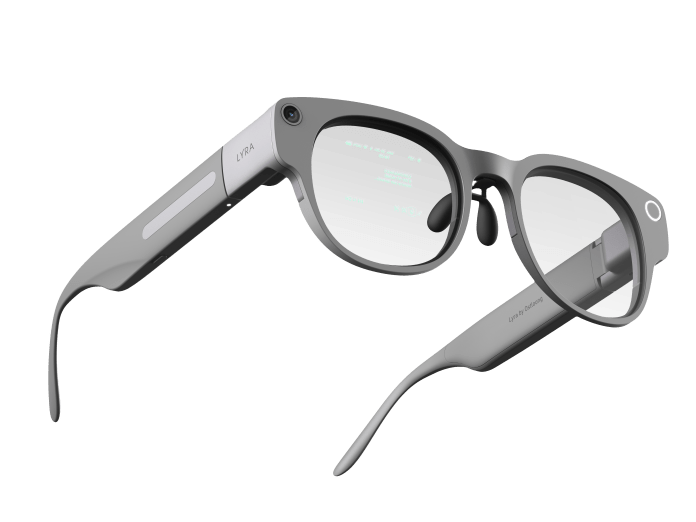
Lyra uses an open-ear design for all-day comfort and supports Bluetooth audio streaming for calls and music. The glasses do not require prescription fitting, lowering the barrier for users who want hearing support without entering a traditional clinical process. Cearvol frames Lyra as a bridge between hearing health and mainstream consumer electronics.
NeuroFlow AI 2.0 Powers the Lineup
All three products are built around NeuroFlow AI 2.0, Cearvol’s in-house intelligent hearing platform. The system relies on a deep neural network to analyze acoustic environments in real time, separating speech from background noise and adjusting output dynamically.
Cearvol says the updated platform delivers about a 24 percent improvement in speech enhancement and recognition accuracy, paired with up to 20 dB of advanced noise reduction. Enhancements to Adaptive Feedback Cancellation and Own Voice Reduction are designed to maintain stable, natural sound across changing environments.
Awards and Broader Lineup at CES
Cearvol’s approach has already picked up third-party recognition, including honors from Hear Advisor, Techlicious, MUSE Design Awards, and American Good Design Awards. At CES 2026, the company plans to show more than just its headline products, with additional models spanning in-ear, canal-style, and true wireless designs intended for varied listening needs.
Looking Ahead
Cearvol’s CES debut underscores a wider shift in hearing technology toward products that feel modern, wearable, and approachable. By combining AI-driven sound processing with unconventional form factors and simplified controls, the company is positioning itself at the intersection of hearing health and consumer electronics.
More details about Cearvol and its hearing technology portfolio can be found on the company’s official website at www.cearvol.com.